Join our newsletters and be the first to receive app updates, exclusive content, and connect with a supportive network of accomplished women. Sign up today to unlock your journey to success with Miranna

Why Your Toddler Won't Listen — and What to Do

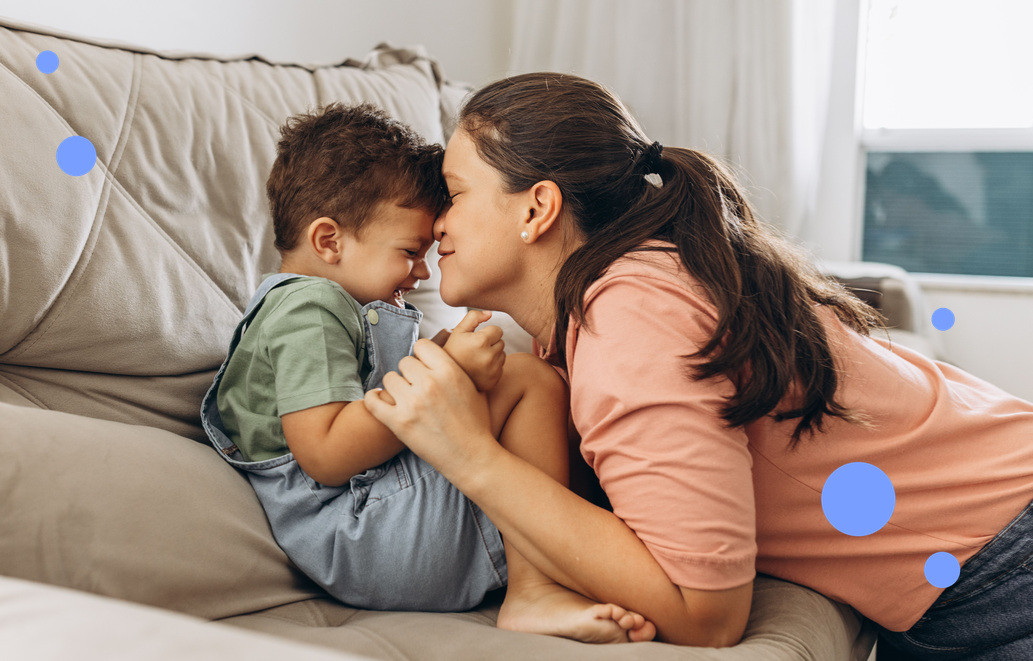
Most of the time, your toddler isn’t ignoring you on purpose — their brain literally can’t do what you’re asking yet. Young children can only hold a step or two of instruction in mind, their impulse control is barely built, and a child who’s absorbed, tired, or flooded with feelings simply tunes out. It’s rarely defiance. You get through by getting close, connecting first, giving one short instruction, showing rather than just telling, and following with calm action instead of repeating yourself. Here’s why it happens and what actually works.
Why won’t my toddler listen?
At Miranna, we turn the latest parenting books and the work of today’s child-development experts into short summaries — and for this one, we gathered what several of them say about the universal, teeth-grinding experience of a toddler who won’t listen.
Start with the brain. Dr. Dan Siegel and Dr. Tina Payne Bryson, in The Whole-Brain Child, describe the “upstairs brain” — the part that plans, controls impulses, and follows directions — as still under construction well into the twenties. On top of that, following instructions leans on working memory, attention, and impulse control, all of which are only just coming online in a toddler. So when your two-year-old doesn’t stop and put on their shoes, they may have genuinely lost the instruction somewhere between your mouth and their feet.
There’s also a relationship piece. In Raising Mentally Strong Kids, Dr. Daniel Amen and Dr. Charles Fay make a point that lands hard once you notice it: your relationship is the channel everything you teach travels through. Lectures, repeated warnings, and a rising voice don’t move down that channel — they teach a child to tune it out. A kid who hears a steady stream of correction learns that your voice is background noise to wait out. Their fix is to come in curious, not furious: get calm and connected first, because a child flooded with feeling has, for the moment, gone offline for logic.
And there’s plain development. Following a direction isn’t one skill — it’s several at once: hearing the words, holding them in mind, resisting the more interesting thing, and doing the boring thing instead. Those come in on a timeline. Around one to two, most children manage a single-step instruction (“give me the cup”). Two- and three-step directions (“put your cup on the table and get your shoes”) usually aren’t reliable until closer to three. So a lot of what reads as “won’t listen” is really “can’t hold all of that yet.” One thing worth ruling out: if a toddler regularly doesn’t respond to their name or seems not to hear you, a quick hearing check is reasonable — the ear infections that are so common at this age can quietly dull hearing for a while.
How do I get my toddler to actually listen?
Once you see listening as a brain-and-connection thing, the moves get simple — and they’re close to what Siegel and Bryson call connect and redirect:
- Get close. Instructions shouted across a room mostly don’t land. Walk over, get down to their level, put yourself in their line of sight.
- Connect first. A hand on the shoulder, their name, a beat of eye contact. You’re bringing the upstairs brain back online before you ask it to do anything — the same present-moment attention at the center of mindful parenting.
- Give one short instruction. One thing, a handful of words. Save the two-part requests for when they’re older.
- Say what TO do, not what to stop. “Walking feet” hands a small brain a clear action; “stop running” only names the thing you don’t want.
- Follow with calm action, not repetition. If nothing happens, don’t say it a fifth time — help them do it. Amen and Fay’s phrase is enforce with actions, not words. Repeating teaches a child that words are optional; a calm follow-through teaches that they’re not — the same consistency that sits at the heart of positive discipline.
If you want Amen and Fay’s full approach in about seven minutes, you can hear it summarized in the Miranna app.
Phrases that get more cooperation
Small wording shifts do a surprising amount of work:
- Instead of “Stop running” → “Walking feet, please.”
- Instead of “Don’t touch that” → “Hands in your lap.”
- Instead of “Hurry up” → “You can walk or hop to the door — which one?”
- Instead of “Get your shoes on now!” → “When your shoes are on, we can go outside.”
- Instead of “Did you hear me?” → get down, make eye contact, and say it once, simply.
{{Article Banner}}
Why does my toddler say “no” to everything and ignore me?
Somewhere around two, “no” becomes a toddler’s favorite word — and that’s a milestone, not a mutiny. This is the age when a child works out that they’re a separate person with their own will, and “no” is them trying that will on for size. Tuning you out can be part of the same push: a small grab for control in a world where grown-ups decide almost everything.
So give control where you safely can. Real choices — “red cup or blue cup?”, “walk or hop?” — let a toddler flex that new independence on your terms, which means they don’t have to fight you to feel it. And when a “no” isn’t up for debate, you can name the feeling and still hold the line: “You don’t want to leave the park. We’re still going — do you want to walk, or should I carry you?” The feeling gets heard; the boundary stays put.
When that frustration boils over into hands rather than words, how to stop your toddler from hitting covers the same connect-first sequence for the harder moments. And if the not-listening spikes when your attention is elsewhere, our piece on attention-seeking behavior in kids covers what’s driving that.
FAQ
At what age should a toddler follow directions?
Roughly one to two years for a single-step instruction, and closer to three before two- and three-step directions are reliable. Before that, plan to help them through it rather than expecting them to do it on your word alone.
Is it normal for my 3-year-old to ignore me?
Very. At three, kids are testing independence and still building the attention and impulse control that listening needs. Connect first, give one clear instruction, and follow through calmly — that works far better than repeating yourself.
My 4-year-old won’t listen — is something wrong?
Usually it’s ordinary four-year-old behavior. But if not-listening comes with delayed speech, not responding to their name, or little eye contact, mention it to your pediatrician — and rule out hearing, since frequent ear infections can dull it at this age.
How many instructions can a toddler follow at once?
Usually just one. Keep it to a single step and add more as they grow — stacking “do this, then this, then that” is asking for more than their working memory can hold.
Does yelling make my toddler listen?
It might get a jump in the moment, but over time a raised voice teaches a child to tune out — the opposite of what you want. Calm, close, and a follow-through you actually carry out does more.
Get close, keep it short, connect before you correct, and let your actions carry the message. The listening grows in right alongside the brain.

When you're ready to talk to someone
Some parenting moments need more than an article. Miranna's coaches work with mothers on the hard, specific stuff — the mornings you repeat yourself ten times, the feeling of being ignored in your own home, staying calm when nothing lands — at your pace, when you're ready. Browse who you'd want to talk to right in the app.
When you're ready to talk to someone
Sometimes the next step is having one good conversation. Miranna's coaches work with women navigating burnout, hormonal shifts, relationships, and the in-between moments — at your pace, when you're ready.
Browse who you'd want to talk to and book a session right in the app.



People ❤️ Miranna