Join our newsletters and be the first to receive app updates, exclusive content, and connect with a supportive network of accomplished women. Sign up today to unlock your journey to success with Miranna

When You're an Angry or Exhausted Parent: Why It Happens and What Helps

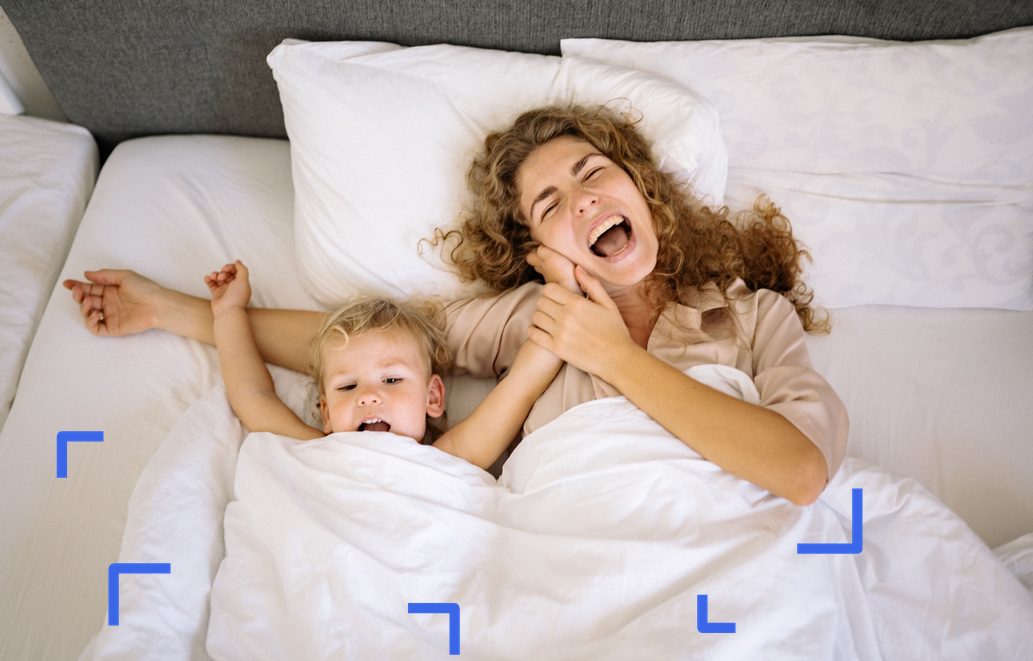
Losing your temper or running on empty doesn’t mean you’re a bad parent — it means the demands on you have outgrown the resources you have to meet them, and your brain is doing exactly what an overwhelmed brain does. Anger is usually the visible tip of something underneath: exhaustion, an unmet need, too much for too long with too little help. The research is also unexpectedly reassuring on the part most parents lie awake about: you don’t have to be calm all the time, or even most of the time. What matters far more than never rupturing is repairing afterward. Here’s what’s happening when you lose it, and what actually helps.
Why do I get so angry at my kids?
At Miranna, we turn the latest books and the work of today’s doctors and researchers into short summaries — and for this piece, we turned the lens away from the child and onto the person doing the parenting, because that’s the part almost no one talks about.
Start with the moment itself. When you snap, the same thing is happening in your head that happens in your toddler’s during a tantrum. Dr. Dan Siegel and Dr. Tina Payne Bryson, in The Whole-Brain Child, describe the brain as a two-story house: a downstairs brain that runs on instinct and big emotion, and an upstairs brain that reasons, plans, and keeps you patient. Under enough stress, the connection breaks and you “flip your lid” — the downstairs brain takes over, and the calm, wise parent you meant to be is temporarily offline. It isn’t a character flaw; it’s neurology, and it happens to adults too. Their model for what’s going on and how to come back is summarized in the app if you want it in one sitting.
There’s a bigger picture behind the individual blowups, too. In Matrescence, journalist Lucy Jones gathers the science showing that becoming a mother physically remakes the brain and body — a transformation as dramatic as adolescence, happening mostly in the dark, with almost no cultural language for it. When you feel like a different, shorter-fused person than you used to be, you’re not imagining it, and you’re not failing. You’re in the middle of one of the largest reorganizations a human life contains, usually while sleep-deprived and under-supported — and if you want that whole shift laid out in about seven minutes, you can hear it summarized in the app.
Is this parental burnout?
Sometimes the anger isn’t really the problem — it’s the smoke coming off a slower fire. Researchers Isabelle Roskam and Moïra Mikolajczak have spent years defining parental burnout as its own distinct condition, separate from ordinary stress and from job burnout. It has three hallmarks: an overwhelming exhaustion in your parental role, a growing emotional distance from your kids (going through the motions, feeling numb where there used to be warmth), and a sense that you’ve lost your footing as a parent.
The crucial part of their model is what causes it. Burnout isn’t a sign you love your children less or that you’re weak. It’s what happens when the chronic demands of parenting outweigh your resources for long enough — too little sleep, help, money, or margin, held up against a standard of parenting no human could actually meet. Fix the balance, and the symptoms ease. It’s estimated to affect a meaningful share of parents, which is worth knowing for one reason above all: if this is you, you are not the only one, and it is not a verdict on you.
Does yelling damage my child?
This is the fear that keeps good parents up at night, so here’s the research plainly. In the 1970s, developmental psychologist Edward Tronick ran the now-famous “still-face” experiment and, across decades of work, found something that ought to be printed on every nursery wall: even healthy, securely attached parents and children are out of emotional sync a large share of the time. Perfect attunement doesn’t exist. What predicts a secure, resilient child isn’t the absence of rupture — it’s the presence of repair.
In other words, the raised voice followed by a genuine reconnection isn’t the thing that harms your child. It may be the thing that teaches them the single most important lesson about relationships: that people fall out of step, and then find their way back. A parent who never slips, never snaps, never gets it wrong isn’t a model of a human being — and a child who only ever sees flawless calm learns nothing about recovery. As the pediatrician Donald Winnicott put it decades ago, the goal was never the perfect parent. It was the “good enough” one.
That reassurance has an edge worth naming. It applies to the ordinary rupture-and-repair of a tired parent losing it and coming back — not to frightening, aggressive, or contemptuous behavior that keeps happening with no repair. If home has tipped into the second thing, that’s exactly the signal to get support, which the last section covers.
How do I stop yelling and stay calm?
You can’t white-knuckle your way to calm, and willpower fails fastest exactly when you’re most depleted. What works is changing the conditions, not just the intentions.
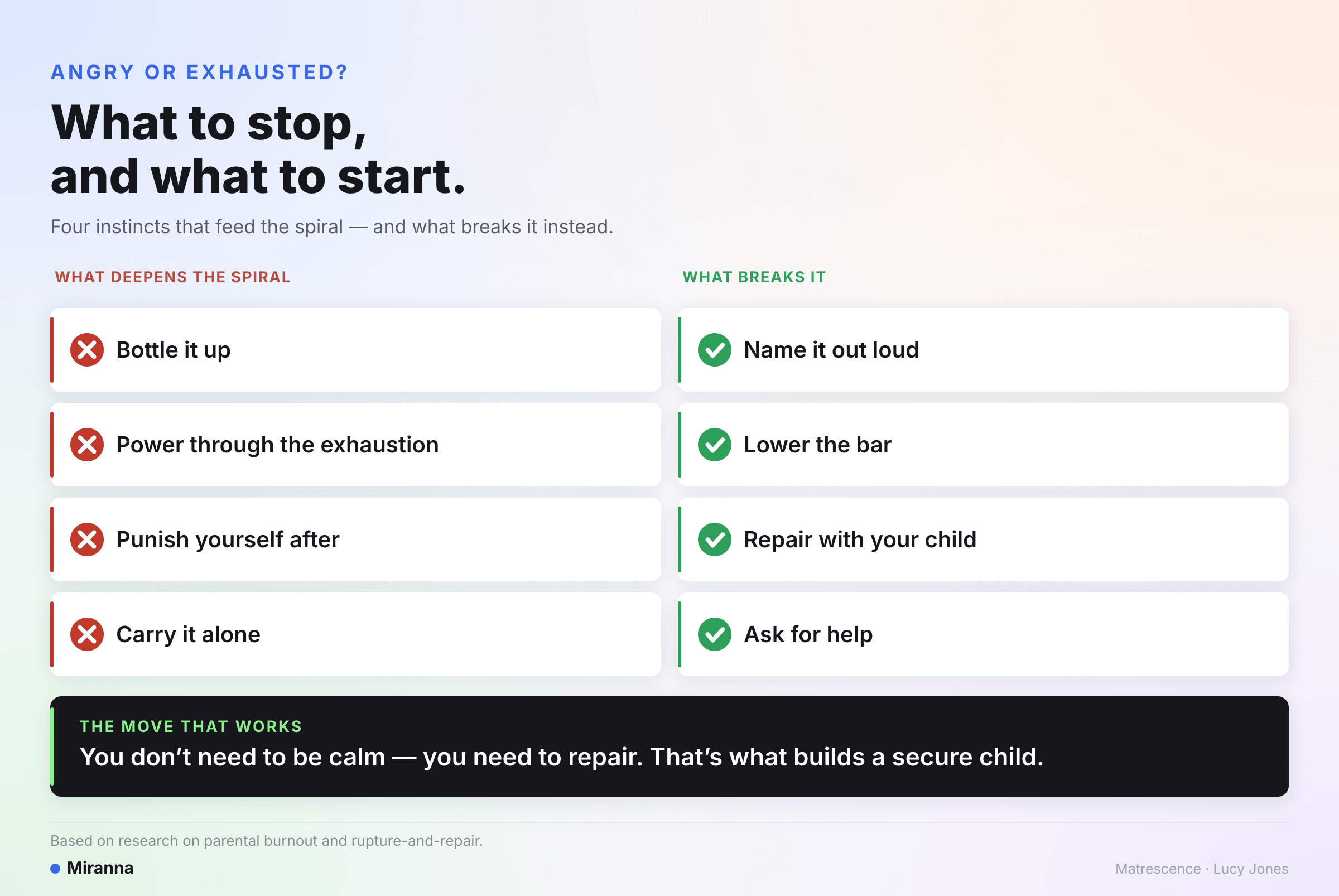
- Catch the early warning, and buy a second. You get a few physical signals before the lid flips — clenched jaw, rising voice, heat in your chest. That’s your cue to pause, not push through. “I need a minute” and a few steps away is not a failure of authority; it’s the most responsible thing you can model. That bought second is the whole of mindful parenting in miniature.
- Run the HALT check. Hungry, Angry, Lonely, Tired — your reactivity is often just your own unmet needs wearing a costume. A snack, a glass of water, five minutes outside, or an earlier bedtime does more for your patience than any amount of resolve.
- Lower the bar on purpose. A lot of parental rage is the gap between an impossible standard and a real Tuesday. Drop the standard. Fewer activities, easier dinners, lower stakes, fewer non-negotiables — especially with a strong-willed child, where picking fewer battles and holding them calmly beats fighting every one.
- Repair, every time. This is the highest-leverage move you have. Once you’re both calm, go back: “I got too loud earlier. That wasn’t about you — I was overwhelmed. I’m sorry.” You’re not undermining your authority; you’re teaching repair, and you’re proving the relationship survives a bad moment. Repair pairs naturally with the calm limits in our guide to positive discipline.
- Refill the tank — and share the load. Burnout is a resources problem, so treat it like one. Hand off tasks, lower the invisible workload, say yes to help, and protect even small pockets of time that are yours. This isn’t indulgence; it’s maintenance on the one adult the household runs on.
- Trade self-attack for self-compassion. Shame is not a course correction — it’s fuel for the next blowup. The parent who says “I’m doing a hard job on empty, and I’ll repair and try again” recovers faster than the one who spends the evening in self-loathing. Your kids borrow your nervous system; a calmer, kinder inner voice is one they get to keep.
{{Article Banner}}
When to get more support
Most parental anger and exhaustion eases when the load lightens and the basics get met. But some signs mean this is bigger than a hard patch, and reaching for help is the strong move, not the failing one: rage that feels genuinely out of your control or frightens you, thoughts of hurting yourself or your child, a persistent numbness or dread toward your kids that doesn’t lift, or a sense that you simply can’t recover no matter what you try. A doctor or therapist can help — and parental burnout and postpartum mood conditions are common, real, and treatable. Telling someone isn’t an admission of defeat. It’s how the load finally gets shared.
FAQ
Why am I so angry at my kids?
Usually because you’re depleted, not because something is wrong with you. Anger tends to sit on top of exhaustion, unmet needs, or chronic overload — when the demands outstrip your resources, your brain’s calm, reasoning part goes offline more easily. Meeting your own basic needs does more for your patience than trying harder.
Is it normal to feel like I hate being a parent sometimes?
Yes. Resenting the role in a hard moment doesn’t mean you don’t love your children. A persistent emotional numbness or dread toward them, though, can be a sign of parental burnout and is worth talking through with a professional.
Does yelling at my child cause lasting damage?
An occasional raised voice followed by genuine repair is normal and not harmful — research finds that recovering after rupture is what builds secure attachment. What does harm is frequent, frightening conflict with no repair. If that’s the pattern, it’s worth getting support.
What is parental burnout?
It’s a distinct condition — chronic exhaustion in the parental role, emotional distancing from your children, and a loss of parental fulfillment — caused by demands outweighing resources over time. It’s common and it eases when the balance is restored.
How do I calm down in the heat of the moment?
Notice the early physical signs, pause before you react, and step away for a beat if you can — “I need a minute.” Check whether you’re hungry, angry, lonely, or tired, and address that. Then, once you’re both calm, repair.
Being an angry or exhausted parent isn’t the opposite of being a good one — it’s often what a good parent looks like partway through an impossibly hard job with too little support. Meet your own needs, lower the bar, repair when you slip, and let go of the idea that calm was ever supposed to be constant. Your child doesn’t need a perfect parent. They need a real one who keeps coming back.

When you're ready to talk to someone
When you're ready to talk to someone
Sometimes the next step is having one good conversation. Miranna's coaches work with women navigating burnout, hormonal shifts, relationships, and the in-between moments — at your pace, when you're ready.
Browse who you'd want to talk to and book a session right in the app.



People ❤️ Miranna