Join our newsletters and be the first to receive app updates, exclusive content, and connect with a supportive network of accomplished women. Sign up today to unlock your journey to success with Miranna

How to Cope with Loneliness: A Gentle, Practical Guide


There’s a particular kind of quiet that settles in on a Sunday evening, or after the group chat goes still, or when you close the laptop at the end of a remote workday and realize you haven’t spoken out loud to anyone in hours. If you’ve felt it, you already know: loneliness isn’t always about being by yourself. Sometimes it shows up in a full room.
Here’s something that might take a little weight off: you’re in very good company. The U.S. Surgeon General’s 2023 advisory on loneliness found that about half of American adults had been experiencing it—and that was true even before the pandemic made everything harder. So whatever you’re feeling, it isn’t a personal failing or a sign that something is wrong with you. It’s one of the most common human experiences there is, and it’s one you can do something about.
This guide walks through what loneliness actually is, why it happens even when you’re surrounded by people, and the practical, doable ways to ease it—starting small.
What Is Loneliness, Really?
Loneliness isn’t a headcount. You can have hundreds of contacts and still feel it; you can live alone and rarely feel it at all. The Surgeon General’s advisory describes loneliness as a subjective, distressing feeling that comes from a gap between the connection you have and the connection you want. It’s the distance, not the number.
That definition matters, because it explains why “just go to more events” so often misses the point. If the connections you already have feel shallow, more shallow connections won’t fix it. What closes the gap is depth and a sense of being genuinely known—and that’s something you can build on purpose.
It also helps to separate loneliness from simply being alone. Being alone is a circumstance. Loneliness is a feeling. Plenty of time by yourself can be restful, even restorative, when you’ve chosen it. We’ll come back to that difference, because learning to tell the two apart is one of the most freeing things you can do.
Why Do You Feel Lonely Even Around People?
This is the version of loneliness that confuses people the most—and it’s incredibly common. You’re at the dinner, on the team call, even out with friends, and still feel oddly unseen.
Usually it comes down to one thing: presence without depth. You’re around people, but the talk stays on the surface—logistics, weather, work, the kids’ schedules. None of it touches the part of you that wants to be known. Researchers at Harvard’s Making Caring Common project have found that many lonely people are surrounded by others but don’t feel appreciated or able to share what’s really going on with them. Company isn’t the same as connection.
A few things tend to feed this feeling:
- Life transitions. A move, a breakup, a new baby, a job change—anything that scrambles your routines can quietly thin out your connections before you notice.
- Leaning on one person for everything. When a single relationship carries all your emotional weight, the rest of your social world can wither, leaving you isolated the moment that one person is unavailable.
- Surface-level digital contact. Likes and quick replies feel like connection but rarely satisfy the deeper need. More on that below.
The good news hidden in all of this: if loneliness is about depth, then you don’t need a bigger social life to feel better. You need a slightly deeper one—and that’s a much smaller, more achievable project.
What Are the Signs of Loneliness?
Loneliness doesn’t always announce itself clearly. It often wears other outfits—restlessness, low motivation, scrolling for hours, feeling irritable or flat, or craving constant background noise so the quiet doesn’t get too loud. Some people notice they’re reaching out less and less, or that they feel disconnected even in moments that “should” feel good.
Naming it for what it is—I think I’m lonely—is genuinely useful. It turns a vague, heavy mood into something specific you can respond to.
How Do You Cope with Loneliness Day to Day?
There’s no single switch that turns loneliness off. What works is a handful of small, repeatable moves that, over time, close the gap between the connection you have and the connection you want. Pick one or two to start—you don’t need all of them.
{{Article Banner}}
Reach out before you feel ready
Loneliness has a cruel side effect: it makes reaching out feel harder, even as it makes you need connection more. The fix is to lower the bar and move first. Text one person something small—a meme, a memory, a “thinking of you.” You’re not asking for a deep conversation. You’re just opening a door. Most people, it turns out, are quietly hoping someone will.
Deepen what you already have
You probably don’t need a pile of new friends so much as a little more depth with the people already in your orbit. Turn an acquaintance into a friend by suggesting one specific plan. Move a work-friendly colleague toward a real friendship with a coffee that isn’t about work. If the issue is more about lacking friends entirely, our guide to making friends as an adult is the place to start.
Build routines that put people in your path
So much of connection runs on simple repetition—seeing the same faces, in the same place, again and again. A weekly class, a regular café, a volunteer shift, a run club. These “third places” outside home and work do quiet, steady work against loneliness without requiring you to be brave every single time.
Tend to your relationship with yourself
This sounds soft, but it’s load-bearing. When time alone feels unbearable, every gap in your social calendar becomes painful, and you may cling to connections that don’t actually serve you. Learning to enjoy your own company—a walk you love, a hobby that absorbs you, a quiet ritual that’s just yours—takes the desperation out of the search and lets connection come from a steadier place.
Be honest about the scroll
Social media is a strange medicine for loneliness—it looks like connection and often deepens the ache. The Surgeon General’s advisory points to research linking heavy social-media use with higher feelings of isolation, partly because watching everyone else’s highlight reel makes your own life feel thin by comparison. You don’t have to quit. Just notice when scrolling is replacing real contact rather than leading to it, and trade twenty minutes of it for one actual message to one actual person.
Connect by giving
Loneliness turns our attention inward, which can deepen the spiral. Doing something for someone else—volunteering, helping a neighbor, checking on a friend who’s also struggling—flips that. Contribution creates connection almost as a side effect, and it reliably lifts the giver’s mood, not just the receiver’s.
How Do You Deal with Loneliness When You Have No Friends?

If you’re starting from near zero, please hear this first: having no close friends right now is far more common than it looks, and it’s a starting point, not a verdict on you.
Begin with the lowest-pressure connections and build outward. Weak ties—the barista, a neighbor, a coworker—are real social nourishment, and research suggests these small, friendly exchanges genuinely matter for wellbeing. From there, join something built around a shared interest so connection has a natural on-ramp, and let consistency do the slow work of turning strangers into familiar faces, and familiar faces into friends.
When Is Loneliness Something to Take More Seriously?
Most loneliness eases with connection and time. But sometimes it sits heavier—when it lingers for a long stretch and comes wrapped in hopelessness, persistent low mood, or a sense that nothing will change. That’s not weakness, and it’s not something you have to white-knuckle alone.
If that’s where you are, talking to a therapist or your doctor is a strong, ordinary step—the same way you’d see someone for a pain that won’t go away. Reaching out to one trusted person counts too. There’s no threshold of “bad enough” you have to reach first; wanting to feel more connected is reason enough.
A Kinder Way Through
Loneliness is loud, but it’s also workable. It responds to small, repeated steps—one message, one standing plan, one evening you spend with yourself on purpose instead of by accident. You don’t have to overhaul your life. You just have to start narrowing the gap, one move at a time.
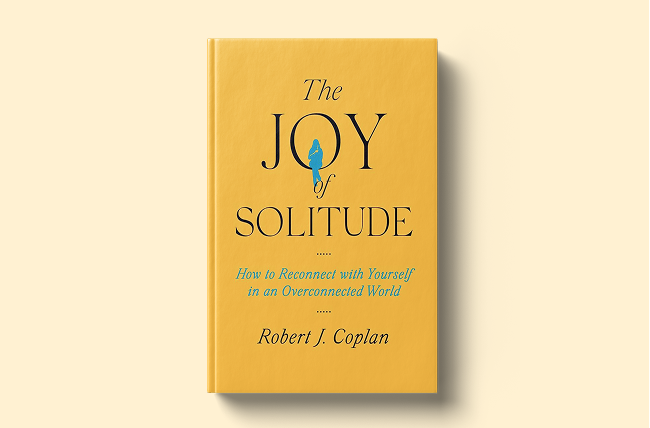
If the hardest part is the time you spend alone, Miranna turns the best books and podcasts on solitude and connection into short audio summaries—gentle, practical ideas you can take in on a quiet evening and use the next day.
You won’t always feel this way. The first small step is usually the hardest, and you’ve basically already taken it by reading this far.
FAQ
What’s the difference between loneliness and being alone?
Being alone is a situation—simply not having other people around. Loneliness is a feeling—the distressing sense that the connection you have falls short of the connection you want. You can be alone and perfectly content, or surrounded by people and deeply lonely. Telling the two apart helps, because it points you toward what you actually need: more solitude that restores you, or more genuine connection.
How do I stop feeling lonely?
Start small and aim for depth over volume. Reach out to one person before you feel ready, deepen a relationship you already have, and build a weekly routine that puts familiar faces in your path. Pair that with learning to enjoy your own company and easing off social media when it’s replacing real contact. Loneliness rarely lifts in one big moment—it eases through small, repeated steps.
Why do I feel lonely all the time, even around people?
Because loneliness is about depth, not headcount. If the people around you only ever engage with you on the surface—logistics, small talk, work—the part of you that wants to be truly known can still feel unmet. Feeling lonely in a crowd usually signals a need for deeper, more honest connection rather than simply more company.
Can you be lonely and not alone?
Yes, and it’s one of the most common forms loneliness takes. Living with a partner, working on a busy team, or having a full social calendar doesn’t guarantee you feel understood. When relationships lack closeness or you don’t feel appreciated within them, loneliness can persist no matter how many people are nearby.
How do I cope with loneliness at night?
Evenings amplify loneliness because the day’s distractions fall away. A gentle routine helps: a wind-down ritual that’s genuinely yours, a voice note to a friend in another time zone, a book or audio summary instead of endless scrolling. If nighttime loneliness regularly tips into hopelessness or keeps you from sleeping, it’s worth talking to someone you trust or a professional.

You don’t have to carry this alone.
When you’re ready, Miranna’s coaches can help you work through loneliness and rebuild connection at a pace that feels right. Browse who you’d want to talk to—one good conversation is enough to start.
When you're ready to talk to someone
Sometimes the next step is having one good conversation. Miranna's coaches work with women navigating burnout, hormonal shifts, relationships, and the in-between moments — at your pace, when you're ready.
Browse who you'd want to talk to and book a session right in the app.


People ❤️ Miranna